Who We Are
At Ansilo Data Labs, we believe we are entering an age of greater clarity and precision: some would say, an age of Truth.
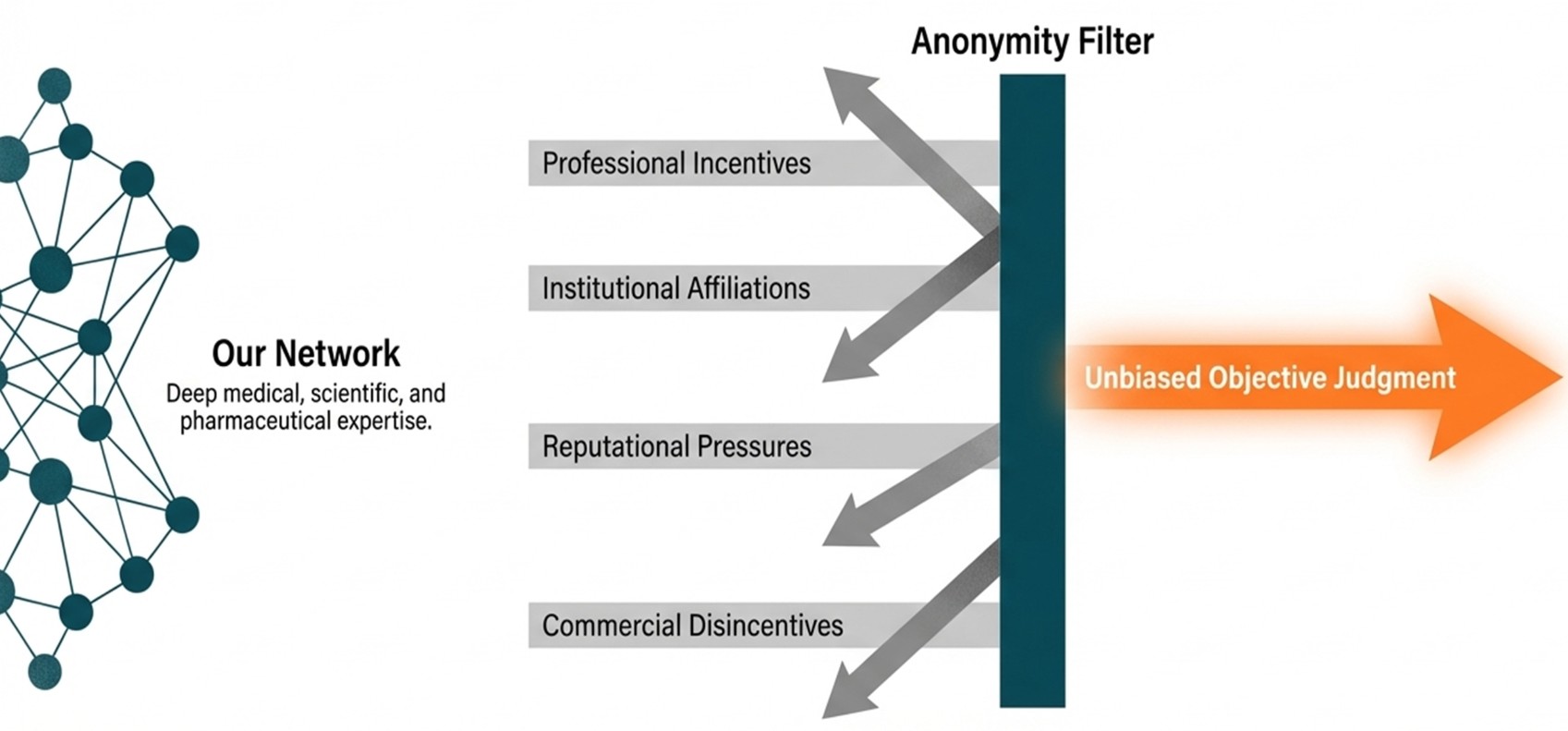
Our team, alongside a global network of contributors, is fortunate to draw on deep medical, scientific, and pharmaceutical expertise. We have chosen to remain unnamed not to avoid scrutiny, but to reduce the risk that professional incentives, institutional affiliations, reputational pressures, or commercial disincentives might subtly shape judgment.
The intention is simple: to keep the focus on the evidence rather than on the personalities behind it. We strive to let the data tell the story.
Our work does not ask to be accepted on authority, despite the significant authority of the expert collaborators. It asks to be tested on the strength of its sources, the quality of its reasoning, and the fairness of its conclusions.
Our reports are not accusation-led exposés. They are evidence-led analytical reviews designed to examine where published narratives, regulatory interpretations, and commercial incentives may sit in tension with the underlying record. Their purpose is not to impose certainty where the evidence remains contested, but to clarify what is known, what is inferred, and what remains uncertain.
We do not begin from a presumption of fraud or bad faith on the part of regulators, medical experts, or the companies involved. Rather, we ask whether dominant clinical narratives may in some cases have become more confident, coherent, or settled than the underlying record appears to justify.
Our claims are grounded in cited public materials, including peer-reviewed literature, regulatory documents, trial publications, company disclosures, and other recognized primary and secondary sources. The goal is to make each report reviewable, interrogable, and open to independent scrutiny.
In most cases, the central issue is not individual misconduct, but the way incomplete evidence, institutional incentives, and repeated interpretation can gradually harden uncertainty into apparent consensus.
We encourage readers to test the claims, trace the sources, and challenge the reasoning. These reports are not presented as final authority, but as structured tools for deeper scrutiny.